Step-By-Step Guide on How to Start Selling on Amazon
Entering the Amazon marketplace can be a lucrative venture, but success requires careful planning and execution. This guide will walk you through the key steps to becoming a successful Amazon seller, from choosing the right products to effectively managing your business.
1. Identifying the Right Products to Sell

Choosing the right products is a foundational step for any Amazon business. It can make or break your success, so take the time to research and make informed decisions.
Analyze Market Demand and Consumer Trends
Researching what consumers want and staying ahead of trends is essential. Here’s how to get started:
- Explore Amazon’s Best Sellers Page: This feature highlights popular products across categories, giving you insights into what is in high demand.
- Study Sales Data: Examine sales rankings within product categories. Higher rankings often indicate products with strong sales potential.
- Monitor Seasonal and Trending Products: Keep track of seasonal shifts, holiday-related items, or products influenced by current events.
- Use Tools Like Amazon Product Opportunity Explorer: This tool provides valuable data on search behavior and purchase trends, helping you identify profitable opportunities.
- Evaluate Profit Margins: High sales volume is great, but your chosen products should also offer strong profit potential after accounting for Amazon fees and other expenses.
2. Define Your Business Model and Niche
To carve out a space in the competitive Amazon marketplace, selecting the right business model and niche is critical.
Explore Your Interests and Expertise
Choosing a niche that aligns with your passions or knowledge can make the process more enjoyable and increase your chances of success.
Assess Market Opportunities
Utilize tools like Google Trends and Amazon-specific analytics to identify growing niches with sustainable demand.
Analyze Competition and Profitability
While some niches are highly competitive, they may also promise higher sales volumes. Balance competition with the profitability of products in your niche.
3. Setting Up Your Amazon Seller Account

Once you’ve decided on what to sell, the next step is registering your Amazon seller account.
Choose the Right Selling Plan
Amazon offers two primary seller plans:
- Individual Plan: Ideal for those selling fewer than 40 items per month, with a per-sale fee of $0.99.
- Professional Plan: Costs $39.99 per month and is recommended for sellers who plan to scale. It offers advanced features like bulk listing tools and access to detailed sales reports.
Register on Seller Central
Gather key details, including your business name, address, tax ID, and bank account information, to complete the registration process. After signing up, you’ll gain access to Seller Central, a comprehensive dashboard for managing your Amazon business.
Set Up Your Profile
Configure your seller profile with relevant details, such as your business policies, shipping rates, and payment settings. Ensure that tax information is accurate to avoid compliance issues.
4. Sourcing Your Products
Decide how to source your inventory based on your business model and budget.
Explore Sourcing Options
- Buy from wholesalers: Purchase products in bulk at discounted prices for resale.
- Manufacture Your Own Products: Develop custom items to differentiate your brand, though this requires a higher upfront investment.
- Dropshipping: Partner with suppliers who handle inventory and shipping directly to customers. This model reduces overhead costs but offers less control over quality and branding.
5. Creating and Optimizing Product Listings
Your product listings are your primary tool for attracting customers. Optimize them for search visibility and conversion.
Craft High-Impact Listings
- Compelling Product Titles: Include relevant keywords, starting with the brand name, and keep titles concise and clear.
- Descriptive Bullet Points: Highlight the product’s key features and benefits in a format that is easy to scan.
- Detailed Descriptions: Provide in-depth information to answer potential customer queries.
- High-Quality Images: Use sharp, professional images that show your product from multiple angles. Infographics can further clarify features.
Use Strategic Keywords
Keywords are essential for improving search visibility. Use tools like Google Keyword Planner and Amazon’s autocomplete feature to identify high-traffic keywords. Place these strategically in your title, bullet points, and backend search terms.
Leverage Amazon’s Tools
Amazon offers tools such as Fulfillment by Amazon (FBA) and Sponsored Products to enhance your listings and improve sales performance.
6. Managing Inventory and Pricing

A successful Amazon business requires efficient inventory management and competitive pricing strategies.
Track Inventory Levels
Avoid stockouts and overstocking by implementing a real-time inventory management system. This ensures you can meet demand without tying up excess capital.
Optimize Pricing
Regularly adjust your prices based on competitor activity, market demand, and seasonal trends. Aim for a balance between affordability and profitability.
7. Marketing and Promoting Your Products
Marketing plays a pivotal role in driving traffic to your listings and increasing sales.
Run PPC Campaigns
Amazon’s Pay-Per-Click (PPC) advertising allows you to bid on keywords to appear in search results. With PPC, you only pay when customers click on your ad, making it a cost-effective strategy for increasing visibility.
Offer Promotions and Discounts
Boost sales by offering coupons, lightning deals, or buy-one-get-one promotions. These strategies attract bargain hunters and encourage quick purchases.
8. Exploring Fulfillment by Amazon (FBA)
Consider using FBA to streamline your operations. Amazon handles storage, packing, shipping, and customer service, freeing up your time to focus on growth.
Getting Started with FBA
- Set Up FBA on Seller Central: Choose FBA as your shipping option during account configuration.
- Prepare Products: Adhere to Amazon’s packaging and labeling requirements.
- Ship to Fulfillment Centers: Send your inventory to Amazon’s warehouses, where it will be sorted and stored.
9. Tips for Long-Term Success
Before launching your Amazon business, keep these additional tips in mind:
- Engage with Seller Communities: Learn from experienced sellers by joining forums and online groups.
- Monitor Performance Metrics: Regularly review sales data, customer feedback, and fulfillment metrics to identify areas for improvement.
- Budget Wisely: Plan for unexpected costs, such as returns or slow sales periods.
Conclusion
Becoming a successful Amazon seller involves thoughtful planning, continuous learning, and effective execution. Each step contributes to building a profitable business, from selecting the right products to leveraging Amazon’s tools. You can turn your Amazon store into a thriving enterprise with the right strategies and a commitment to excellence.
For tailored support, consider partnering with us. At u-commerce, our expertise helps sellers maximize visibility, optimize Amazon listings, and drive consistent sales growth.

A Comprehensive Guide For Sustainable Selling On Amazon
In today’s market, sustainability is more than just a trend—it’s a movement that is reshaping the way businesses operate. As consumers become increasingly aware of the environmental impact of their purchases, they are actively seeking out brands that prioritize eco-friendly practices. For Amazon sellers, this shift presents both a challenge and an opportunity. Embracing sustainable selling not only helps protect the planet but also aligns your business with the values of a growing segment of conscious consumers. By incorporating sustainable practices into product sourcing, packaging, and transparency, you can create a competitive edge, foster customer loyalty, and contribute to a more sustainable future. Our Amazon Experts can help optimize Amazon listings and SEO for Amazon sellers, to
Sourcing Sustainable Materials
Sustainable sourcing is fundamental to building an environmentally conscious e-commerce business. For Amazon sellers, this process starts with selecting suppliers that prioritize renewable resources and operate with a reduced carbon footprint. Choosing materials like organic cotton or bamboo over conventional synthetics not only supports the environment but also aligns with the growing consumer demand for greener products. It’s essential to verify that your suppliers follow sustainable harvesting and manufacturing practices, which can be done through on-site visits or by reviewing their sustainability reports.
Choosing Eco-Friendly Products

When curating your product selection, consider the long-term environmental impact. Eco-friendly products are not just better for the planet; they resonate more deeply with consumers’ values. Opt for durable items that encourage reuse and are made from biodegradable materials. Offering products that promote a sustainable lifestyle, such as reusable straws or solar-powered gadgets, can differentiate your brand in a crowded market.
Transparency and Certifications
Consumers increasingly value transparency regarding the origins and lifecycle of the products they buy. By providing clear, honest product descriptions and detailing the materials and processes involved, you build trust with your customers. Acquiring certifications like Fair Trade, Global Organic Textile Standard (GOTS), or Forest Stewardship Council (FSC) can further validate your commitment to sustainability. Display these certifications prominently in your Amazon listings to reassure customers of your eco-friendly practices.
Reducing Packaging Waste
Reducing waste is a crucial aspect of sustainable packaging. Amazon sellers committed to eco-conscious practices are moving toward minimalistic packaging designs that reduce material use while still protecting products during transit. Adopting “frustration-free” packaging not only cuts down on waste but also makes it easier for consumers to recycle. This approach can lead to cost savings and a smaller environmental footprint.
Utilizing Sustainable Materials For Packaging
The shift away from traditional plastic packaging materials is well underway. Eco-friendly alternatives like cornstarch packing peanuts and mushroom-based packaging provide effective cushioning while being biodegradable and non-toxic. Recycled cardboard is another excellent option, offering durability and the opportunity for eco-friendly branding with sustainable inks. By embracing these materials, you can ensure your packaging aligns with both environmental goals and consumer expectations.
How To Create A “Prefer Products With Sustainability Certifications” Policy?
Step 1:
Log in to your Amazon Business account. Hover over the “Hello, [Your Name]” option at the top of the Amazon.com homepage, then click on Business Settings.
Step 2:
In the settings menu, select Buying Policies & Approvals.
Step 3:
Click on Add Policy to create a new buying policy.
Step 4:
Navigate to the Product Policies section.
Step 5:
Choose the option Prefer Products with Sustainability Certifications.
Step 6:
Assign a name to your policy and craft a personalized message for your buyers.
Step 7:
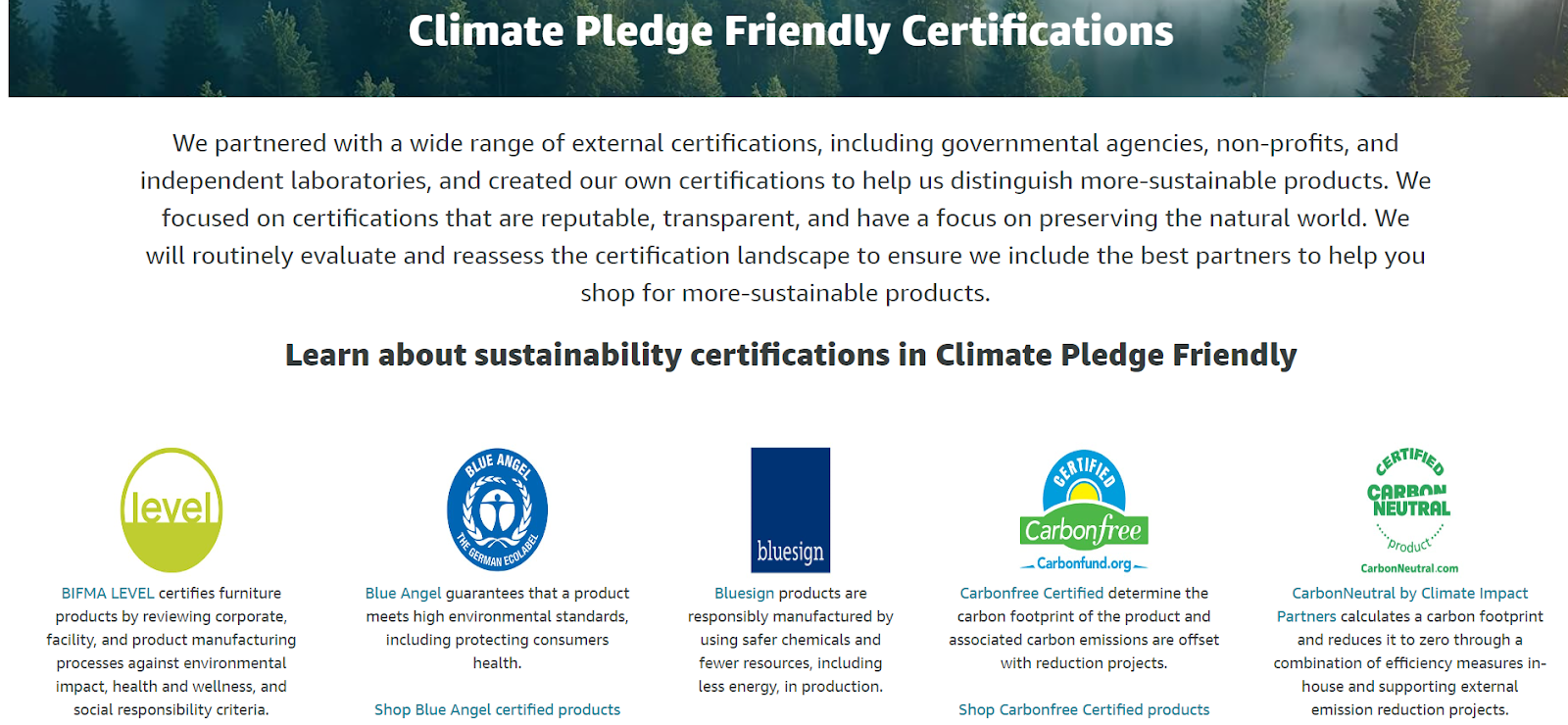
Select either all or specific Climate Pledge Friendly certifications that align with your sustainability goals.
Step 8:
Finally, click Save to implement your new policy.
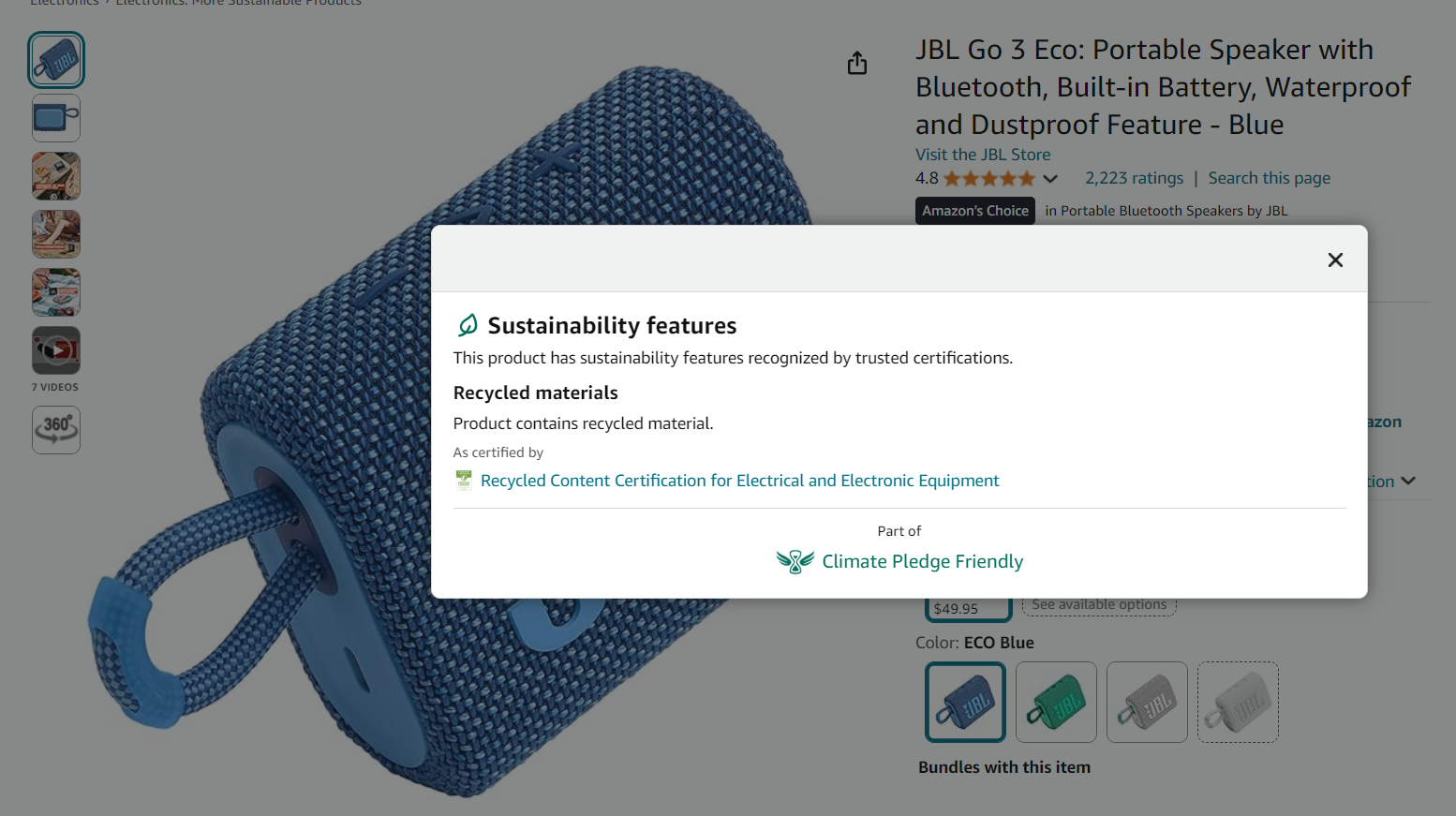
Here is an example of a product with a climate pledge-friendly badge:
Strategies To Implement Green Marketing On Amazon
Green Up Your Storefront
Emphasize your commitment to sustainability by integrating eco-friendly visuals and messaging throughout your storefront. Use banners and badges to highlight your environmental initiatives and make it easy for customers to identify your green products at a glance.
A+ Content With Impact
Leverage A+ Content to tell the story behind your brand’s commitment to sustainability. Include detailed information about your eco-friendly practices, such as sourcing methods, and how these benefit both the customer and the planet. This not only educates but also builds trust with your audience.
Packaging With A Purpose
Incorporate a QR code on your packaging that links to a webpage detailing your sustainability efforts and certifications. Additionally, consider using your packaging as an educational tool by including tips on how customers can recycle or reuse the materials.
Compelling Videos
In your videos, feature behind-the-scenes footage of your sustainable practices, such as sourcing materials or manufacturing processes. Engage viewers by highlighting the positive impact of their purchase decisions on the environment, making them feel part of a greater cause.
Conclusion
At u-commerce, we understand that sustainable selling on Amazon is not just a trend but a vital strategy for the future. By implementing sustainable practices in product sourcing, packaging, and marketing, you align your brand with the growing consumer demand for eco-friendly options. Our expertise in Amazon listing optimisation and enhancing product visibility can help you effectively showcase your commitment to sustainability. By integrating these green marketing strategies, you not only foster customer loyalty but also contribute to a more sustainable e-commerce landscape. Contact us to elevate your brand’s sustainability efforts and thrive in an increasingly eco-conscious market.

How to Dropship on Amazon: A Guide for Amazon Dropshipping in 2025
Looking for something that is pocket-friendly & also want to start your selling journey with Amazon? Then you should try dropshipping on Amazon as soon as possible.
Do you want to start selling goods on Amazon but don’t want to make a big financial commitment? Give dropshipping on Amazon a try!
Dropshipping products on Amazon is a novel business idea that doesn’t require a big initial investment, in contrast to private label or wholesale. Dropshipping on Amazon boasts low overhead and upfront costs, but to do it right, you have to make sure you’re following the rules.
Do you have any inquiries concerning Amazon sales? Check out our in-depth tutorial right now.
What does dropshipping entail?
Through the use of dropshipping, online retailers can outsource order fulfillment without having to make an initial inventory purchase. The product will be shipped to your customer by your manufacturer, distributor, or supplier once a customer places an order.
How Amazon dropshipping operates
Even though it may seem a little complicated, we’ve explained everything to you so you may better understand how it operates and begin Amazon dropshipping in 2025.
First, the product you’ve posted on Amazon is bought by an Amazon client (seen on the diagram’s left).
Secondly, you buy the product straight from the supplier (located on the right side of the diagram) and provide them with the customer’s details as soon as the transaction is complete and you have the money.
Finally, the supplier mails the product to the client after receiving the buyer’s details.
Amazon’s dropshipping guidelines: 2025 revisions

To avoid getting in trouble with Amazon, please make sure you completely understand their dropshipping policy rules before you start dropshipping on the platform.
You risk having your account suspended or losing the ability to sell through Fulfilled by Merchant (FBM) if you break the policy in any way.
Because Amazon’s dropshipping policy is so stringent, please make sure to take note of the details provided below.
Is dropshipping from Amazon legal?
Indeed! Dropshipping products from Amazon is permitted on the site as long as it is done legally, and it is entirely legal. When dropshipping on Amazon, you have a few guidelines to follow:
All invoices, packing slips, exterior packaging, and any other documentation that comes with the product must name you as the seller. Your manufacturer or supplier should be left out.
Before sending the order, you must remove any packing slips, invoices, external packaging, or other evidence that identifies a third-party drop shipper. It is your responsibility to receive and handle returns.
It is your responsibility to abide by all of Amazon’s Terms of Service as stipulated in the seller agreement.
It is forbidden, with no exceptions, to order things from internet retailers like Walmart, Amazon, or other third-party sellers on Amazon and have the retailer deliver the goods straight to clients.
I’ll say it again: do not order goods from another internet seller and have them shipped to a consumer. You will be suspended by Amazon for doing this, which is a major no-no.
Here’s an example of what Amazon does not permit:
- A coffee machine is listed on Amazon for sale.
- The merchandise is bought by a consumer.
- You buy the identical item from Walmart.com and then input the shipping information for the Amazon buyer.
- The package that the Amazon consumer receives has Walmart identifiers on it.
Since they placed their order on Amazon, customers will be extremely confused and irritated if they receive a shipment from Walmart.
As long as Walmart is not mentioned on a packing slip or the packaging, you can instead engage in a technique known as retail arbitrage, which involves buying an item from another store, like Walmart, and reselling it on Amazon.
What is the difference between dropshipping and other Amazon selling strategies?
There are numerous ways to launch an Amazon business, dropshipping being just one of them. Other well-liked and maybe more profitable ways to sell goods on Amazon are bookselling, private label, retail arbitrage, online arbitrage, wholesale, and handmade.
Buying products in bulk from a supplier to resell them to another store or using them yourself as a retailer is known as wholesaling.
Buying products at a discount from other retail establishments and reselling them on Amazon is known as arbitrage.
One way to manufacture your products to sell on Amazon is through private labeling.
But dropshipping on Amazon has a lot of benefits over private labels and wholesaling.
Dropshipping V/S Amazon FBA
Fulfillment by Amazon, or Amazon FBA, is a fulfillment option managed by Amazon that takes care of customer service in addition to storing, packing, and fulfilling orders on behalf of merchants.
The primary distinction between dropshipping and FBA is that the former requires you to buy goods and transport them to Amazon’s fulfillment centers. You don’t have to buy any inventory upfront while dropshipping.
Additionally, FBA adds the Prime emblem to merchants’ listings, adding even more customer convenience and trust. Indeed, 43% of consumers believe that the Amazon Prime emblem plays a significant role in their decision to buy a product, and 61% of consumers have access to an Amazon Prime membership.
Publish as needed, dropshipping
Print-on-demand (particularly Amazon Merch on Demand) is a common method of drop shipping.
You may promote personalized goods like t-shirts, mugs, posters, and even books using print-on-demand without having to buy inventory. The supplier then produces the product for you and ships it when you close a deal.
Is dropshipping on Amazon profitable?
It is possible to make money dropshipping on Amazon; in fact, 94% of sellers who do so report making money, based on data from Jungle Scout’s State of the Amazon Seller Report. Everything hinges on where you get your goods from, how much you charge for them, and how much is left over after Amazon fees.
Recall that dropshipping is merely a fulfillment strategy; selling goods on Amazon will function the same as it would if you made bulk purchases. Your main priorities should be conducting product research (which we’ll cover in more detail below) and locating a supplier that can provide the goods you wish to sell at a profit.
How much does dropshipping on Amazon cost?
Dropshipping on Amazon, as we just discussed, is a terrific option to start selling because the initial expenses are usually minimal.
You will avoid having to pay hundreds or thousands of dollars for inventory because you won’t need to purchase any upfront.
The $39.99 monthly subscription price for an Amazon Seller Account and maybe the purchase of product research tools will be the only up-front expenses.
Amazon will charge you a referral fee for every sale once you sell a product. This cost is usually 15%.
Pros of Amazon Dropshipping
Benefits of Amazon dropshipping include cheap startup expenses. Unlike private label and wholesaling, which are two well-liked e-commerce strategies, dropshipping doesn’t require you to have your own inventory.
Rather, you only utilize a portion of the money you were paid by the customer for the transaction to buy the product from the supplier and arrange for shipping to your buyer.
No extra charges for storage. You won’t be responsible for paying storage fees to Amazon FBA or a third-party fulfillment center because your supplier will be shipping out orders on your behalf.
Quick to assemble. It’s quick and simple to set up dropshipping on Amazon since you don’t need to own your inventory. You don’t have to wait for the manufacturing or shipping of your product to reach the fulfillment location, after all. It is prepared for use. A sale will suffice!
Fully computerized enterprise. Many web programs and plugins are available that let you completely automate dropshipping on Amazon. This means that you may run your dropshipping business with (nearly) total hands-off.
Dropshipping is permitted on Amazon. The dropshipping policy on Amazon states that dropshipping “is generally acceptable.” Just be careful to adhere to Amazon’s unique dropshipping policies.
Simple to investigate. Selling manufacturers’ pre-made goods on Amazon might be a part of dropshipping, though you can also dropship items that you tailor with your own source. Because of this, you may see how well other sellers of that specific good are doing on Amazon by using tools like Jungle Scout, an all-in-one platform for selling on Amazon.
Drawbacks of dropshipping from Amazon
As wonderful as dropshipping may seem in terms of benefits, there are some drawbacks to take into account as well as its realities.
Rivalry. Dropshipping has relatively low entry barriers, which means that competition may be fierce. Additionally, even if your products may be able to stand apart from the competition, nothing is preventing other Amazon sellers from offering the same goods.
Price is therefore one of the few tools available to differentiate yourself from the competition, which may result in a “race to the bottom.”
Slow delivery times. Products that are drop-shipped on Amazon are frequently shipped from manufacturers and suppliers, many of whom are located abroad.
Because of this, shipping from foreign suppliers to the final customer may take several weeks. You should therefore search for nearby vendors that provide drop shipping.
Inadequate quality assurance. You have no control over the product’s quality because products are transported straight from the producer to the customer.
It’s understandable how things could sustain damage during transit when you take into account that they may travel thousands of kilometers to get to their destination.
Four steps to drop shipping on Amazon
Now that you have a better idea of how dropshipping works on Amazon, let’s take a look at how to set yourself up for success.
Step 1: Create an account as an Amazon seller.
You will require an Amazon seller account to sell on Amazon. Go to sellercentral.amazon.com to purchase one. You will be presented with two options by Amazon regarding the kind of account you can open there: personal and business.
Step 2: Look for a product with strong demand and little competition.
Finding a product to sell on Amazon is the next step.
To achieve this, look for high-demand/low-competition product possibilities utilizing a tool like Jungle Scout’s Opportunity Finder.
Additionally, even if you might have your metrics for locating these kinds of things, I advise beginning with the following standards:
- Sales of 100–300 units monthly
- Define the competition as “very low” or “low.”
- Set the average monthly cost between $20 and $70.
- Put the niche score at 7 or higher.
- You ought to have a great deal of product options to look at throughout all categories as a result.
Additionally, I advise starting small and keeping things straightforward. Because they are often low maintenance, patio, sports & outdoors, housewares, and home & garden are all excellent categories for beginners.
Step 3: Locating drop shippers for Amazon
Once you have a few product concepts, you must locate a source.
Aliexpress is the main source of information about dropshipping products. This business-to-business platform connects suppliers that are eager to dropship their products with e-commerce firm owners.
Enter the product’s search parameters, and similar to Amazon, a range of products will appear for your consideration.
Upon selecting one, you will be presented with several facts, including the pricing of the product and the shipping charges.
Although most things on Aliexpress are shipped from China, delivery periods may be lengthy, even if it can be a decent option. Long shipping periods will be a turnoff because Amazon customers are accustomed to receiving their products in 1-2 days.
Look for local suppliers, such as US-based companies that provide dropshipping for specific products, as was previously indicated. You only need to put in some time to find them; they are out there.
Step 4: Establish a Product listing on Amazon
You must create an Amazon product listing once you have a product idea and a supplier to produce it.
Go to Inventory > Add a product from your Seller Central account. Click Inventory > Add a product when the Add a Product screen appears. “Create a new product listing” should be clicked when the Add a Product screen appears.
You must select your product category first. After completing that, you will need to complete the listing’s details.
Don’t forget to include Amazon fees when determining the price of your drop-shipped item. Depending on the category, professional sellers are required to pay a referral fee ranging from 8 to 15%. Additionally, individual sellers are charged $1.00 for each sale.
The Selling on Amazon fee schedule provides further information on Amazon’s charges, broken down by category.
Ultimately, you can publish your listing and begin receiving sales as soon as you’re ready.
How to get started with dropshipping: Five pointers for Amazon success
Naturally, starting a dropshipping business on Amazon is a little simpler than selling products through other channels, but dropshipping on Amazon requires a little more effort to be successful.
Here are five pointers to make dropshipping successful for you.
1. Advertise your Amazon listing
You will need to increase traffic to your product listing if you want to optimize sales. This can be accomplished in several ways.
Amazon Pay-Per-Click (PPC) is the company’s in-house sponsorship scheme. Using PPC, you may generate ads for your products that rank better in Amazon’s search results for certain keywords you provide.
Next, you can use outside strategies to promote your Amazon product listing, like Facebook advertisements, social media, email marketing, and blogging. This strategy can assist you in setting your product apart from the competition, even if it can be a little more challenging to start if your brand doesn’t already have a following.
2. Pay attention to the client
Dropshipping on Amazon allows you to avoid many of the challenging aspects of running your own business. You don’t need to produce your product or ship it. Your only task is to ensure that the consumer receives it and is satisfied.
Dropshipping allows you to devote your time to customer support instead of managing your firm, as would otherwise be the case.
Furthermore, receiving positive feedback on your products from customers is crucial for obtaining high ratings on Amazon.
3. Pay attention to your brand
The main drawback of dropshipping, as I mentioned previously, is that you will be selling a product over which you have no control over its creation or appearance. The same supplier will also be available to other sellers.
You have very little advantage over the competition as a result. You must concentrate on the brand as a result.
Your product doesn’t need to be the “same” as your rival’s, even if it is similar. For instance, 40 oz stainless steel tumblers from the company YETI cost $40 per. The identical stainless steel tumblers are offered by their rival, RTIC, for less than $20. Nevertheless, YETI continues to rule that product category in some way.
4. Obtain exemplars
Make sure you know what you’re selling before you list it. Take a risk and place an advance order for a unit. Better still, you can accomplish this without the provider realizing that you might be a drop shipper.
Examine the sample as soon as it arrives. When it came, how did it look? What was the duration of the process? Did the things come as promised?
Once you begin dropshipping on Amazon, all of these minor details will help you anticipate how your buyers will get the product.
5. Spread a broad netting
Dropshipping eliminates your need for startup expenses, making it simpler for you to reach a large audience. Put differently, you can list many products simultaneously.
A few will not succeed. Success will come to others. Just focus more on what is effective and eliminate the rest.
This strategy is completely OK as long as you go by Amazon’s guidelines. Just remember to maintain your organization and to keep your attention on Tips #2 and #3.
Are you prepared to launch a dropshipping company on Amazon?

With any luck, this post has inspired you to launch your own Amazon company or grow an already-existing one. However, if you need additional inspiration, our State of the Amazon Seller study is jam-packed with insightful information.
Please share any other queries or thoughts you may have about dropshipping on Amazon in the comments section below.
Cheers to your successful sales!

AMAZON PRODUCT VIDEO: THE ULTIMATE GUIDE TO EVERYTHING YOU WANT TO KNOW
As crucial as your product images, adding product videos to your Amazon listings can vastly improve customer experience. With millions of products vying for consumer attention, how do you ensure your product gets noticed? The answer lies in the power of visual storytelling. Welcome to our Amazon Product Video Service, where we transform your product listings into captivating visual experiences that drive engagement and boost sales. 92% of the marketers have already stated that video forms a major part of their current marketing strategy.
Why use Amazon Product Videos?
In short, they will help you sell more products.
Here’s why product videos matter on Amazon and how they can make a significant impact on your sales and brand presence.
1. Enhanced Customer Engagement
Visual Appeal:
Videos capture attention more effectively than static images or text. They can engage potential buyers quickly and hold their interest, making them more likely to stay on your product page longer.
Interactive Experience:
Product videos offer an interactive experience, allowing customers to see the product in action. This dynamic presentation helps viewers understand the product better and makes the shopping experience more enjoyable.
2. Improved Conversion Rates
Detailed Product Understanding:
A video can convey the functionality, features, and benefits of a product in a way that text and images cannot. This comprehensive understanding can lead to higher conversion rates as customers feel more confident in their purchasing decisions.
Emotional Connection:
Videos can evoke emotions and create a narrative around your product, helping customers connect with your brand on a deeper level. This emotional engagement can be a powerful motivator for purchases.
3. Higher Search Rankings
Amazon’s Algorithm:
Amazon’s search algorithm tends to favor listings with rich media content. Including videos can improve your product’s search ranking, making it more visible to potential buyers. Higher visibility often translates to increased traffic and sales.
Enhanced SEO:
Product videos can improve the overall SEO of your listing. The more engaging and informative your content, the better Amazon’s algorithm will rank your product page.
4. Building Trust & Credibility
Professionalism:
High-quality videos convey a sense of professionalism and credibility. They show that you are serious about your product and committed to providing the best possible information to your customers.
Transparency:
Videos offer transparency, allowing customers to see exactly what they are buying. This reduces uncertainty and builds trust, making customers more likely to complete their purchase and less likely to return the product.
Guidelines for Amazon Product Video
1. Video length and content-
- The recommended duration of the video is between 30 seconds and 2 minutes.
- Content Focus: Your video should focus on highlighting the key features, benefits, and unique selling points of the product. Show it in action and demonstrate how it can solve a customer’s problem.
2. Quality of the video
- Resolution: Amazon recommends a minimum resolution of 1280 x 720 pixels (HD). Ensure your video is clear and sharp.
- Aspect ratio: The video should either be in its usual YouTube orientation or with a 16:9 aspect ratio for optimal viewing on various devices.
- Sound: Include clear audio narration or background music that enhances the video without overpowering it. Ensure any spoken content is in the language relevant to your target audience.
- Format: it should be in MP4, MOV, FLV, AAC, AVI, 3GP, or MPEG-2.
3. Logos and branding-
- Videos should not contain several brand logos.
- Format: Videos should be uploaded with a high-quality thumbnail, and they should be in .png or .jpeg.
4. Compliance with Amazon Policies-
- No defamatory statements, inaccurate product reviews, or health claims.
- Amazon product videos must not contain prices, promotion information, discounts, or time-sensitive information.
- No Contact Information is added in the video.
- You can’t modify the manufacturer’s warranty or offer your own.
- Do not direct viewers away from Amazon’s page.
- Do not infringe on others’ intellectual property rights.
- Celebrity endorsements: not permitted unless officially endorsed.
- No alcoholic products in the videos.
5. Mobile Optimization-
- Most customers shop on Amazon using mobile devices, so make sure your video is mobile-friendly and looks great on small screens.
6. Publishing the video
- The person uploading the video must be the brand owner.
- The creator of the video should support claims and any mentioned awards with evidence.
Amazon keeps updating its Amazon Product Video guidelines; thus, make sure you review them and make any changes if needed.
Types of Amazon Product Video-
The type of video you want to post depends on the type of product you are selling.
1. Product Demonstration Videos
Purpose:
To show how the product works, its features, and its benefits in real-life scenarios.
Best For:
Tech gadgets, kitchen appliances, fitness equipment, and any product that has multiple features or requires some explanation.
Example:
A video demonstrating how a multi-function blender can make smoothies, soups, and sauces, showcasing its ease of use and cleaning process.
2. Unboxing Videos
Purpose:
Create excitement and anticipation by showing customers what they can expect when they receive the product.
Best For:
Electronics, subscription boxes, toys, and products with attractive packaging.
Example:
An unboxing video of a new smartphone, highlighting the packaging, accessories included, and first impressions of the device
3. How-To Videos
Purpose:
Provide step-by-step instructions on how to use the product effectively.
Best For:
DIY kits, beauty products, home improvement tools, and any product that benefits from detailed usage instructions.
Example:
A how-to video demonstrating different hairstyles that can be achieved with a hair styling tool, explaining each step in detail.
4. Customer Testimonial Videos
Purpose:
Build trust and credibility by showcasing real customers sharing their positive experiences with the product.
Best For:
Health and wellness products, skincare, fitness gear, and any product where customer satisfaction is crucial.
Example:
A testimonial video featuring customers talking about how a fitness tracker helped them achieve their fitness goals, including before-and-after results.
5. Comparison Videos
Purpose:
Compare your product with similar products to highlight its advantages and unique features.
Best For:
Competitive markets where differentiation is key, such as electronics, appliances, and beauty products.
Example:
A comparison video showing how your brand’s vacuum cleaner performs better than competitors in terms of suction power, battery life, and ease of use.
6. Lifestyle Videos
Purpose:
Show the product being used in a real-life context, highlighting its place in the customer’s daily life.
Best For:
Fashion, home decor, outdoor gear, and any product that integrates into a specific lifestyle.
Example:
A lifestyle video featuring a family using a camping tent on a weekend getaway, showcasing the tent’s spaciousness, durability, and ease of setup.
7. Animated Explainer Videos
Purpose:
Use animations to explain complex products or concepts in an easy-to-understand way.
Best For:
Software, apps, technical products, and products with complex features.
Example:
An animated explainer video demonstrating how a new project management app can help teams collaborate more efficiently, highlighting key features with engaging animations.
8. FAQ Videos
Purpose:
Address common questions and concerns about the product, providing clear and concise answers.
Best For:
Products that generate frequent customer inquiries, such as electronics, health supplements, and home appliances.
Example:
An FAQ video for a dietary supplement, answering questions about dosage, ingredients, and potential benefits.
9. Storytelling Videos
Purpose:
Tell a compelling story about your product or brand to create an emotional connection with the audience.
Best For:
Products with a strong brand narrative or unique origin story, such as artisanal goods, eco-friendly products, and luxury items.
Example:
A storytelling video about a sustainable fashion brand, highlighting the journey from ethical sourcing to the final product, and the positive impact on communities and the environment.
10. Behind-the-Scenes Videos
Purpose:
Give customers an inside look at how the product is made or what goes into the business.
Best For:
Handcrafted goods, artisanal products, food and beverages, and any product where the production process is a selling point.
Example:
A behind-the-scenes video showing the craftsmanship involved in creating handmade leather bags, from selecting the leather to the final stitching.
Do’s and Don’ts:
Do’s-
- Try to hook the viewer in the first few seconds of the video
- Keep the video short and on point
- Make sure you have excellent audio quality
- Ensure your shots are stable, smooth, and professional
- Focus on the main features and benefits
Don’ts-
- Don’t include any promotional information
- Do not violate health claims
- Don’t include any defamatory statements about competitors
How to Upload Product Video in Amazon Seller Central?
Uploading a product video on Amazon can significantly enhance your Amazon product listings, making them more engaging and helping to increase conversion rates. If you’re ready to add a video to your product page, follow these simple steps:
Step 1: Access the Video Upload Section
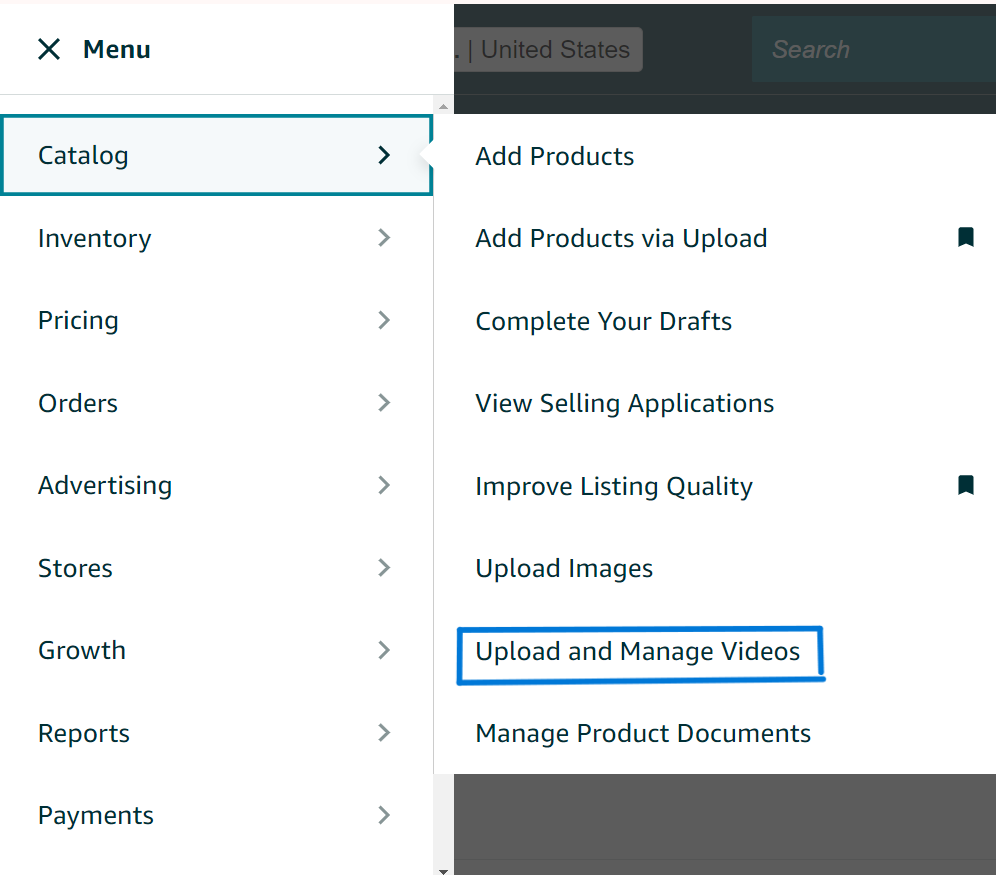
Start by logging into your Amazon Seller Central account. Once logged in, navigate to the Catalog tab at the top of the page. From the dropdown menu, select Upload and Manage Videos. This will take you to the video management section, where you can upload new videos or manage existing ones.
Step 2: Begin the Upload Process
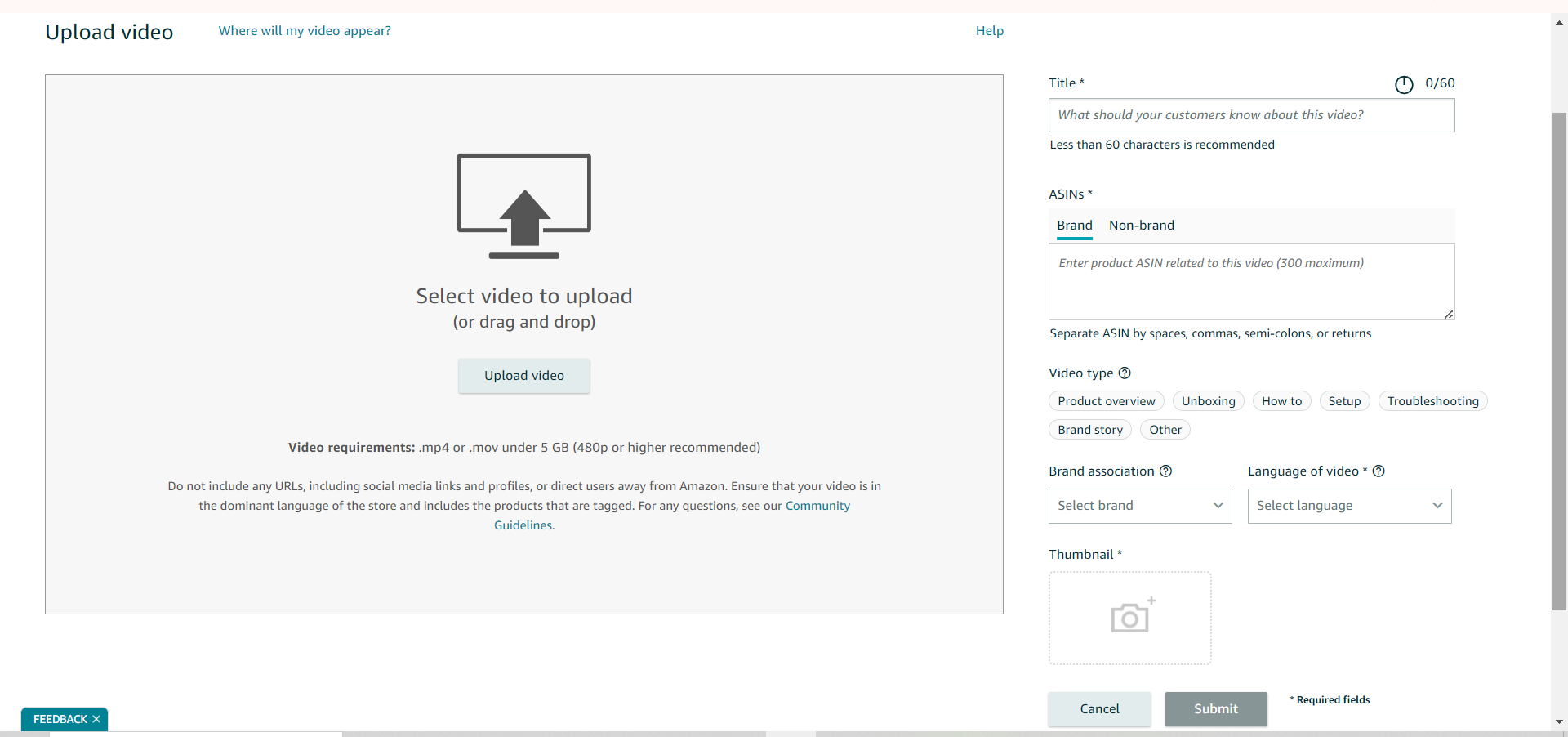
In the video management section, you’ll see a button labeled Upload Video. Click this button to start uploading your product video. This will open a new screen where you can provide details about your video and select the appropriate ASINs (Amazon Standard Identification Numbers) to associate with the video.
Step 3: Choose Brand or Non-Brand
Under the ASINs section, you will be prompted to choose between Brand or Non-brand:
– Brand Option: If your brand is enrolled in Amazon’s Brand Registry, select the Brand option. This allows you to enter up to 300 ASINs related to the product video. Associating multiple ASINs with your video can help you reach a broader audience if you sell variations of the same product.
– Non-brand Option: If your brand is not enrolled in the Brand Register, select the Non-brand option. In this case, you can associate your video with only one ASIN. Make sure to choose the most relevant ASIN to maximize the impact of your video.
Step 4: Finalize and Upload
After selecting the appropriate ASINs, fill in any additional information required for the video, such as the video title and description. Once everything is set, click Upload to add your video to the Amazon catalog. The video will undergo a review process before it goes live on your product listing, so be sure to check back to see when it’s approved.
Where Does an Amazon Product Video Appear on Your Amazon Listing?
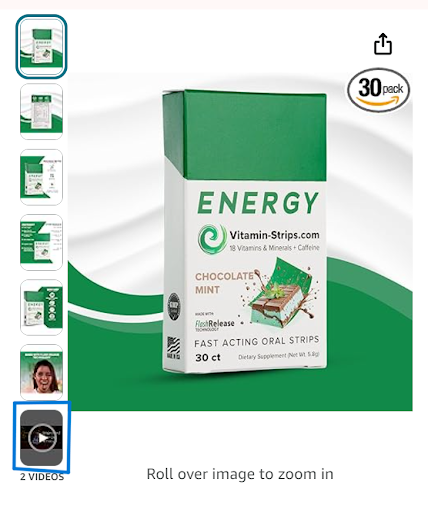
When you upload a video to your product listing, it will appear under the main product images section. Customers can easily find and view the video without having to scroll through your listing.
Get ahead of your competition with our Amazon Product video creation services:
It is mandatory for you to work harder to create Amazon brand development if you want to stay light years ahead of your competitors. Our video services will add a glimpse of life to your product, which results in unique content for the brand to show off proudly. Whether you are a Fortune 500 seller or a seasoned professional, or have just entered the vast world of the Amazon market, these gripping video shots from our side will convert cold visitors or window shoppers into mandatory and repeatable customers.
At u-commerce, our combined team of talents and creative minds is here to handle everything. Our Amazon experts will be the ones to cover creative scouting, post-production, and all the other features involved in making your video a huge success.
Some of the top Amazon brands already trust our video production services. So, the next time you are planning to venture into the new world of selling products on Amazon and need professional guidance, our services are just a single click away! Log online at our official website or ring us up for services you will love from the get-go!
We are Amazon consultants and experts in Amazon Product Video Services, Amazon Listing Videos, and Brand Registry Video Services. Hire our product video expert and upgrade your listings with e-commerce product videos.